

Electric Valve Actuators: Reliable and Durable
- 2025-12-14 12:00:00
- admin
- NO COMMENTS


Field Scenario: When an Actuator Fails in the Field
Imagine a refinery steam network on a sweltering afternoon. An operator triggers a shutdown, but one critical steam isolation valve closes painfully slow instead of snapping shut. Alarms flash as the actuator’s motor trips repeatedly, overheating in its struggle. In the field, you hear the telltale clack of its thermal cutoff resetting. The crew scrambles to engage the manual override, finding the handwheel stiff – the valve is barely moving. This slow closure is more than a nuisance; it’s delaying the entire unit’s shutdown. Upon inspection, technicians discover the actuator’s drive is misaligned with the valve stem. The slight offset caused mechanical binding, and months of this stress led to torque drift – the actuator’s output torque no longer meets spec. In other words, the device thinks it delivered full force, but the sticky valve tells a different story. The result? A valve stuck half-open, process steam still leaking through, and a lot of downtime adding up.
Such scenarios aren’t hypothetical – they’re a real-world nightmare for engineers. A bad actuator can leave a valve stuck open when it should be closed or fail to reach its fail-safe position during an emergency. In a district heating pipeline on a frozen winter night, an actuator that doesn’t fully close a valve might send scalding water where it’s not needed, or fail to open and freeze out an entire city block. In a chemical reactor’s cooling loop, a sluggish valve can mean temperature runaway. The manifestations of actuator trouble are painfully familiar to field personnel: valves that won’t fully open or close, motors that overheat and shut off, gearboxes that grind or slip, and significant lag between command and action. An engineer might note, “It used to take 10 seconds to close – now it’s taking 30.” These are red flags that something inside the actuator is wearing out or out of tune. In our refinery case, the misalignment and wear created a causal chain: improper mounting ➞ added friction on the drive bushing ➞ gear wear and metal shavings in the housing ➞ higher torque demand on the motor ➞ motor over-current trips and slow response ➞ valve fails to seat, risking a safety bypass. We see how an environment or installation issue cascades into a malfunction and process impact. Each link – mechanical, electrical, thermal – is tested, and if any are weak, the whole chain breaks.


Debugging Insights: Sounds, Trips, and Drifts
From an engineer’s perspective, actuator failures rarely come out of nowhere; they announce themselves in subtle ways before the big breakdown. In the field, you learn to trust your senses and instruments:
· Unusual sounds: A healthy electric actuator hums steadily. When gear teeth chip or bearings run dry, that hum turns to a grinding or clicking. Repeated clacks might mean a slipping clutch or torque limiter engaging. In pneumatic units a hiss might indicate a leak, but in electric actuators, it’s the whine of an overloaded motor or the clunk of an internal relay that signal distress. Seasoned techs often put a hand on the housing to “feel” the vibration. A rasping vibration can hint that the gearbox lubrication has broken down or a gear is missing some teeth.
· Torque drift in action: Over time, the actuator’s output torque can deviate from its initial calibration – a phenomenon engineers call torque drift. You might notice valves starting to seat less tightly or requiring manual “tweaking” at the end of travel. For example, a butterfly valve that used to seal with a certain torque now needs a higher setting. Wear and tear on the mechanical linkages or a weakening motor can shift the effective torque output. The actuator’s controller thinks it’s hitting 100% torque, but due to mechanical wear it’s actually delivering less. The result is a valve that isn’t fully closed, leading to leakage or pressure drop complaints down the line.
· Repeated motor tripping: Most electric actuators have internal thermal or overcurrent protection. If an actuator’s motor is repeatedly shutting off after running briefly, it’s a glaring sign of overload. In our refinery scenario, every time the motor tried to close the sticky valve, the current spiked and the thermal protector kicked in. The motor’s duty cycle was exceeded. Many electric units are not rated for continuous duty – they might be 25% or 50% duty cycle devices, meaning they need rest between operations. If run continuously or under excessive load, the motor will burn out. A tripping motor is basically shouting “I’m working too hard!” at you.
· Jerky or slowed motion: An actuator that shudders or moves in stops and starts is often binding mechanically. Misalignment is a prime suspect; if the actuator and valve stems are even a millimeter off-center, each turn might jam slightly. This can also happen from foreign debris in the valve or actuator. One engineering team found an actuator filled with fine sand in a desert installation – the abrasive grit scored the gears and introduced so much friction that the actuator stalled. Slowing closure times are a classic warning sign; if a gate valve that normally takes 60 seconds to stroke now needs 90 seconds, something is dragging. It could be dried-out grease, corrosion, or partial seizing of the drive bushing.
By paying attention to these symptoms, engineers can often catch a failing unit early. As one maintenance chief quipped, “The actuator was telling us it was in trouble, we just weren’t listening.” Proactive teams perform periodic stroke tests and torque trend analyses to detect drift or rising motor current before an emergency hits.
Causal Chains: From Environment & Wear to Malfunction
Electric actuators live in diverse and often harsh environments, and those conditions directly affect longevity. Here are two real-world causal chains that connect environmental or wear factors to actuator malfunctions and process impacts:
· High Cycle, High Temperature Service ➞ Lubricant Breakdown: Consider an electric control valve controlling superheated steam flow. It modulates constantly, with the actuator cycling every few minutes. In a hot refinery pipe rack, ambient temperatures and radiant heat from the steam line bake the actuator. Over time, the grease in the gearbox carbonizes and thickens. This leads to increased friction in the geartrain and a need for higher torque to move the valve. The motor works harder and begins to overheat frequently. Eventually, the actuator can’t deliver the required torque – it stalls or trips mid-stroke. The process impact is severe: the control loop can’t respond, steam flow runs unchecked, and the unit may trip on high temperature. In this chain, heat + high cycling -> lubricant failure -> gear wear -> torque shortfall -> lost control. As a preventative, top manufacturers design actuators with high-temp rated grease and even include built-in thermal sensors on motor windings to cut power before catastrophic overheating.


· Corrosive Environment ➞ Seal Degradation: Now picture an actuator at a coastal chemical plant, operating a brine ball valve that handles chlorinated water. The actuator housing is rated IP67, but years of salt spray and chemical vapors have taken a toll. The outer epoxy coating has blistered and a tiny amount of chloride has crept into the enclosure. The internal circuit board and limit switch contacts develop corrosion. Meanwhile, the once-elastic O-ring seals on the output shaft harden and crack due to UV and chemical exposure. Eventually water ingress occurs during a heavy rain. The next operation command results in a short circuit on the control board – the actuator fails to respond at all, leaving the valve stuck in whatever position it was last. In a chlorine dosing line, a stuck valve could mean an overdose of chemical or an inability to shut off flow in an emergency. This chain – corrosive environment -> seal failure -> water ingress -> electrical failure -> lost valve control – illustrates why robust environmental sealing and materials are critical. As one source puts it, actuators in extreme conditions “need coatings, seals, or materials designed to handle the stress”. Without corrosion-resistant design, failure is just a matter of time.
These examples underscore that reliability isn’t just a function of the actuator’s initial build, but also of how well its design counters the environment and wear factors. Each failure chain teaches a lesson that feeds back into better design or maintenance practices – whether it’s using a high-temperature grease, specifying 316 stainless steel housings, or scheduling seal replacements before the monsoon season.
Design Features that Improve Reliability and Durability
Modern electric actuator design has evolved to tackle the very issues highlighted above. Manufacturers now treat field reliability as paramount, and it shows in the engineering details. Let’s break down the key elements that make a high-quality electric valve actuator tough and dependable:
Rugged Gearing and Torque Protection
At the heart of an electric actuator is the gear train. Many actuators use worm gears or heavy-duty spur/planetary gears to step down the high-speed, low-torque output of the motor into slow, high-torque rotation needed to turn a valve. The choice of gear material and design directly impacts longevity. Top-tier actuators use hardened alloy steel or bronze gearing that can withstand thousands of cycles without appreciable wear. The gears are often designed with generous safety factors on torque so that even as some wear occurs, there’s minimal risk of teeth shearing off. Proper lubrication is also ensured – gearboxes are grease-packed or oil-filled for life, using high-temp synthetic lubricants that resist breakdown.
Crucially, durable actuators include torque protection mechanisms. One common approach is an adjustable torque limiter or clutch that will slip or disengage when the valve hits an end-stop or an obstruction, preventing the motor from stalling out or the gear teeth from stripping. In advanced electric actuators, electronic current sensing serves the same purpose: if the motor current (proportional to torque) spikes beyond a set threshold, the controller cuts power. This saves the valve from an over-torque situation that could damage the seat or stem. Over-torque isn’t just a mechanical concern – it’s a safety issue. A jammed valve hit with excessive force can lead to pipeline or flange failures. By integrating torque limit switches and auto cutoff circuits, the actuator effectively “knows its limits” and prevents self-destruction or process damage. Engineers in the field appreciate this when a valve is stuck – instead of the actuator blindly forcing until something breaks, a good unit will trip and indicate a torque fault. It’s much easier (and safer) to investigate a tripped actuator than to deal with a twisted valve stem or a ruptured line because an actuator went Hulk on it.

Sealed Enclosures and Environmental Protection (IP & Explosion-Proof)
To survive harsh environments, electric actuators are built like little fortresses. Manufacturers adhere to ingress protection standards – IP ratings – to ensure dust and water don’t infiltrate the electronics or motor. Typical industrial actuators are at least IP65 or IP67 (water-tight against jets or temporary submersion). For units in pits or underwater service, IP68 is available, meaning the actuator can be submerged for extended periods without leaks. The sealing involves O-rings on all housing joints, sealed cable glands for wiring, and sometimes purged enclosures to eliminate internal moisture. The benefit of a high IP rating is clear: it prevents the kind of water ingress and corrosion failures we described earlier.
In hazardous locations (like oil refineries or chemical plants with flammable gases), actuators must also be rated explosion-proof. An [explosion-proof actuator] is designed so that if any electrical component inside creates a spark or hot surface, it cannot ignite the external atmosphere. This is achieved by robust flame-proof housings, typically cast iron or stainless steel, with threaded or flanged joints that quench flames. Such actuators carry certifications like ATEX and IECEx for use in Zone 1/Zone 2 areas. For example, a limit switch box on an explosion-proof actuator may have a 316L stainless steel housing and an Ex d IIC T6 rating, indicating it’s safe in hydrogen or acetylene atmospheres. The heavy 316L enclosure not only prevents ignition but also adds corrosion resistance in harsh chemical environments. Explosion-proof electric actuators often feature extended wiring interfaces (to keep the flame path long) and specialized breather drains to prevent condensation internally while maintaining the seal. Meeting standards such as ATEX, IECEx (international explosive atmosphere certifications), and following design codes like API for petrochemical valves means these actuators can be trusted in safety-critical roles. They won’t be the source of an accident – and they are built to keep working even when surrounded by fire or blasts (some actuators offer fire-proof enclosures or intumescent coatings so they can operate or hold position during a plant fire for a certain duration).

Thermal Management and Duty Cycle Design
Electric motors generate heat – that’s a fact of life. In a valve actuator, if the motor is undersized or overrated for its duty, it will overheat and burn out under continuous operation. That’s why serious attention is given to thermal protection and duty cycle rating in reliable actuator designs. Manufacturers will specify the duty cycle (e.g. 25%, 50%, 75%, or 100% continuous duty) and design the motor and gear train accordingly. A 100% duty cycle actuator might have a larger motor or better heat sinking to dissipate heat so it can run non-stop. Many actuators are rated at 30% or 50% duty – meaning they can run for a certain period and then need a rest to cool. For instance, an actuator might take 15 seconds to stroke a valve and then require at least 15 seconds off to stay within a 50% duty cycle. If it doesn’t get that rest (say the valve is being rapidly cycled), the motor temperature will rise with each successive operation.


To prevent damage, thermal overload sensors are embedded in the motor windings on most units. These bi-metal switches or thermistors will trip if the winding temperature exceeds a safe limit, stopping the motor until it cools. It’s an essential fail-safe – without it the insulation on the motor could cook, leading to a shorted motor and an inoperable actuator. Field engineers often encounter this as an actuator that stops mid-operation and then resumes after a cooldown; it’s frustrating but it’s saving the hardware. The key for reliability is to have a motor robust enough and geared appropriately so that under normal conditions it never hits the thermal cutoff. This is where design margin comes in: selecting an actuator with adequate torque so it doesn’t struggle. An actuator driving a valve near its torque limit will run hot and be prone to trip. A wisely oversized actuator, on the other hand, will handle the load coolly and last far longer. Some modern designs even incorporate active thermal management, like finned housings or heat-dissipating coatings, because cooler motors are longer-lived motors.
High-Quality Materials and Protective Coatings
The materials that go into an actuator determine how well it stands up to wear, corrosion, and abuse. Stainless steels are commonly used for critical components: for example, drive shafts and fasteners in a premium actuator might be SS316 or 316L (low carbon stainless) to resist corrosion. As noted, explosion-proof models often use 316L for the entire housing, combining strength with corrosion resistance. Internal gear spindles or worm shafts might be made of alloy steel (like hardened 4140) for strength, whereas the mating worm gear could be bronze or ductile iron – a combination that provides good wear characteristics. Using dissimilar metals in gearing (one harder, one slightly sacrificial) can prevent galling and actually prolong life by embedding wear particles rather than seizing.

For valve interfaces, actuators often have output drives and couplings that are heat-treated to handle high torque. The mounting base follows standards like ISO 5211 (an international standard for valve-actuator flange dimensions), ensuring a proper fit and alignment to the valve – which, as we saw, is vital to avoid misalignment issues. In the image above, the star-shaped drive bushing can be seen; these are often case-hardened for durability.
Coatings and surface treatments are another unsung hero of durability. Actuator exteriors are usually powder-coated or epoxy-painted to fend off the elements. In extremely corrosive settings (think offshore platforms or acid plants), specialized coatings like Halar® (ECTFE) or PTFE are applied to actuator housings and even valve discs/liners. Halar, for example, is a fluoropolymer coating known for excellent chemical resistance and can handle a range of temperatures – it’s been used on valves in chlorine service and can similarly protect an actuator mounted to that valve. PTFE (Teflon) is often used for seals and gaskets inside actuators because it’s chemically inert and has a low friction coefficient, aiding in smooth movement. Some actuators have PTFE-coated bushings or guides internally so that even if lubrication dries out, metal-to-metal contact is minimized.
Valve reliability is tightly coupled with actuator materials as well. For instance, a fire-safe valve might have a soft seal (like PTFE) backed by a metal seal; the electric actuator operating it must be able to generate the torque to tightly shut that metal seal if the soft seal burns away (per API 607 fire-safe standard for valves). Thus, the actuator’s strength and the valve’s materials work in concert to ensure a leak-tight shutoff even in a fire scenario. High-quality actuators will advertise conformance to relevant API, ASME, and ISO standards – which for the end user translates to trust that the materials and design have passed rigorous tests (pressure tests, fire tests, corrosion tests, etc.). For example, an actuator intended for API 6D pipeline valves might need to hold position under line pressure without creeping; this influences the gear design and presence of locking mechanisms.

Smart Controls and Diagnostic Modules
Reliability isn’t just about surviving harsh conditions – it’s also about predictability and control. Modern electric valve actuators often include intelligent control modules that improve both performance and maintainability. These “smart” actuators have features like position feedback, self-calibration, and condition monitoring. How does this aid durability? Consider an actuator with an integrated diagnostic system: it can log the torque required on each operation, detect if it’s trending upward (which might indicate a valve seizing or deposits building up), and alert operators before a failure occurs. Some advanced units even measure the motor current in real time and can detect “unusual signature” patterns that precede a fault. One report noted a plant catching a failing valve because the actuator reported unusual vibration a week before it failed – essentially the actuator became a condition monitoring sensor for the valve.
Additionally, control modules ensure precise positioning (important for control valves that modulate) and can offer fail-safe behavior through battery backups or spring-return mechanisms. Electric actuators historically wouldn’t fail to a safe position on power loss (unlike spring-return pneumatic actuators). But now, many electric units offer fail-safe options: either a mechanical spring pack or a supercapacitor/battery that drives the actuator to a preset safe position if power is lost. This adds a layer of safety for scenarios like a loss of plant power – valves can still go to fail-closed or fail-open as needed to keep the process safe.
Control integration is another aspect – using industry-standard communication (Modbus, Hart, Profibus, etc.) allows the actuator to be a well-behaved element in the control system, reducing the chance of errant signals or calibration drift. Smooth, accurate control means less mechanical stress on the valve and actuator (avoiding overshoot/oscillation). It’s the difference between an actuator that glides to position versus one that hunts and chews itself up with unnecessary movements.

Lastly, ease of maintenance is part of design for durability. Engineers appreciate actuators that have modular components – for example, a control module that can be swapped without disturbing the mechanical parts, or a readily accessible manual override. Features like local status lights or an LCD display on the actuator help technicians diagnose problems in the field (like showing a torque fault code or limit switch status). All of this reduces downtime when something does need attention, and a unit that’s quickly repaired is effectively more “available” and reliable over its life.
Standards and Certification: Ensuring Reliability
When discussing reliability and durability, we’d be remiss not to mention the standards and certifications that govern valve actuators. These act as the industry’s reliability checkmarks:
· API & ASME: The American Petroleum Institute and ASME issue standards for valves and actuators used in critical applications. For instance, API specs might dictate the performance of actuators in pipeline service (e.g., how fast they must close in an emergency, or requiring manual operation capability). An actuator that meets API Standard 607 (fire-safe) on a valve assembly, or API 6D for pipeline valves, has demonstrated it can function under those tough criteria (like fire exposure or prolonged pressure). ASME codes, such as those for power plant valves, ensure actuators can handle certain operating stresses. Also, process safety standards (like IEC 61508 for functional safety) come into play for actuators used in safety instrumented systems, requiring proven reliability data (low failure rates, diagnostic coverage).
· ISO Standards: ISO 5211, as mentioned, standardizes the mounting interface – making reliability better by ensuring the actuator-valve fit isn’t improvisational. ISO 9001 (quality management) certification of the manufacturer is a baseline implying they follow consistent production and testing procedures. Some actuators conform to ISO 22153 (which deals with electric actuators for industrial valves, covering performance requirements). Adherence to these standards often means the actuator design went through type tests – endurance cycling, vibration tests, corrosion exposure (like salt spray), etc. It’s not just the manufacturer claiming durability; it’s verified by a standard’s test regime.
· ATEX / IECEx: We touched on these for explosion-proof ratings. An ATEX-certified actuator has been tested so it won’t ignite an explosive atmosphere – a non-negotiable requirement in many industries (oil & gas, mining, grain processing). IECEx is the international equivalent. Using an actuator with Ex d or Ex m protection gives peace of mind that in the event of an internal fault, it won’t cause a disaster externally. It also generally means the actuator is built tougher (explosion-proof models are usually beefier), which indirectly contributes to durability. The fact that a manufacturer went through the certification means every part down to the screws were scrutinized (for instance, using non-sparking materials, special greases that don’t outgas flammable vapors, etc.). Even in non-hazardous areas, that level of engineering often correlates with a robust product.

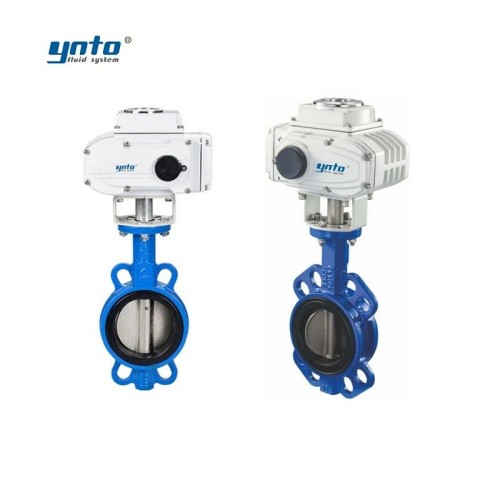
· Industry-specific standards: In the power industry, there are IEEE and IEC standards for electric actuators used on power plant valves (for example, nuclear plants have their own qual tests – actuators must pass seismic qualifications, heat aging, etc.). Marine classifications (like DNV, ABS) might be needed for actuators on ships or offshore, ensuring they can handle shock and saltwater. These certifications and tests collectively ensure that an actuator isn’t just good on paper – it’s been proven under simulated real-world stresses. As an example, plants often require actuators to be factory tested for a certain number of cycles at full load; a unit that passes, say, 20,000 cycles at rated torque without failure gives confidence it won’t quit after 100 cycles in the field (indeed, one of our electric butterfly valve assemblies recently boasted an endurance test of 20,000 operations without performance loss).
On the maintenance side, standards also guide reliability practices. API and ISO have recommended intervals for inspections and testing. It is recommended to verify setpoints and stroke times periodically per manufacturer or API guidelines. Plant safety audits check that actuators on emergency valves (ESDVs) are tested and functional. Compliance with these standards means a more reliable operation because you catch problems early. In essence, standards codify the hard lessons learned from decades of actuator use – they embed safety factors, test conditions, and quality controls that directly result in actuators that can be trusted in the field.
Conclusion: Keeping Systems Humming with Trustworthy Actuators
To the engineers and operators who rely on them, electric valve actuators aren’t just motorized gadgets – they are the gatekeepers of flow, safety, and control. A tiny misalignment or a worn gear can have outsized consequences, from a plant trip to an environmental release. That’s why so much engineering effort goes into making these actuators reliable and durable. We’ve seen how real-world failures manifest – torque drift creeping in over time, motors crying for relief as they trip on overload, valves stuck when you need them free – and how clever design counters each of these.

Modern electric actuators are built with the understanding that downtime is costly and unsafe. So they come armored with sealed housings, packed with precision gears, guarded by intelligent controls, and certified by rigorous standards. Whether it’s a ball valve in a food factory or an electric butterfly valve on a oil pipeline, the best actuators keep on turning year after year, rain or shine, without a hiccup. They slash maintenance costs by preventing damage (thanks to torque limiters and overload cutouts) and prevent disasters by reliably hitting their fail-safe positions when everything else goes wrong.
In the end, ensuring actuator reliability is a team effort: manufacturers continue to innovate with sturdier and smarter designs, and plant engineers remain vigilant with installation alignment, periodic testing, and proactive maintenance. With both sides working in concert, those previously dreaded words – “the valve is stuck, the actuator won’t move” – become a rarity. Instead, you get the silent satisfaction of systems humming along, valves moving on command with precision, and actuators that just do their job day in and day out. In the control room, when you push that button to close a valve, you expect a response. Thanks to durable electric actuators, you’ll get it – reliably, every time.

- 2026-09-07 09:14:41
- 2026-09-04 10:03:12
- 2026-09-02 10:16:58